I hope you find my writing and business tips and observations useful. My business and blog are dedicated to helping businesses communicate clearly and reach their potential.
Read, and enjoy!Tash

Book review: Freelance your heart out
Despite having a pile of business related books to read (or finish reading), and some more business recordings and webinars to hear, I have finished this eBook by Kris Emery.
Why have I read it faster than other books?
I think the fact it is shorter than many business books (being a 141 page eBook) makes it easier to get through it, but that’s not enough by itself. Freelance your heart out is a friendly, chatty style that is easy to move from page to page so it is achievable relatively quickly.
What is it about?

eBook cover
Kris works as a freelance transcriber and translator, and this eBook is basically her journey from corporate employee to successful freelancer. From her journey, Kris has picked up a few things and she shares them in this eBook so others can enjoy a freelance lifestyle if they wish.
While some parts are specific to transcribing and translating, most of the eBook is easily relatable for other freelance skills – as a freelance writer, I know I was either nodding along or finding a connection throughout her tips.
There are 25 specific tips in the book, each of which offers value to someone thinking of or starting as a freelancer. Read as part of the entire eBook, these tips are even more valuable as they come after a story or example that illustrates the tip.
Reading Freelance your heart out
As I’ve said before, hearing someone else’s business story is not my prefered way of learning something about business. However, Kris actually states the lessons, not just her story, so it becomes more useful than just her freelance story.
The writing style is easy to read, but does have some substance to it, and reading the eBook inspired some ideas and thoughts – and a few blog posts as well! A few spots I found hard to read, and needed to be reread more than once, which was a shame.
I like how Kris has included some practical information as well as more general tips (like learn to negotiate and set greater goals).
It is not, however, a complete guide to starting a freelance business, but gives some good ideas on what is needed and hope that it is possible for many people.
I also like the fact that she doesn’t make freelancing seem like easy street or something to do in your spare time to make a fortune – being a freelance anything takes time and dedication to make it work. It can br a great lifestyle (for example, I love being able to take my son to kinder and help at school as required) but it usually is much harder than having a traditional job.
Whether you end up working freelance or changing corporate jobs instead, having a realistic idea of freelancing could help you make a wiser decision about your future.
If you have ever tried freelance work, did you find it tough? Did you expect it to be easier than the reality turned out to be?
Is there business life beyond Facebook?

A strong marketing strategy encompasses more than one option
Like it or not, Facebook is a big site that attracts millions of people to it. Every day. Repeatedly.
As a business, it is important to understand how Facebook could be part of your marketing plan – note I don’t say you have to be ON Facebook but I do think it is a good idea to actively know about it and consciously decide whether or nor to use it for marketing.
Facebook is changing
If you’ve been on Facebook or read many marketing/SEO blogs, you’ll know that Facebook has changed things a number of times.
Recent changes, however, have made businesses wonder if Facebook will be a viable marketing option soon. Updates on business pages do not go into your fans’ news feed by default any more – some do, but fans have to show an interest first and it’s still no guarantee.
Facebook is moving towards charging businesses to be in front of fans.
As a business, it’s understandable that they want to make money. For SMBs, there is a real and justifiable fear that they won’t be able to compete in the advertising stakes against the big guys. A problem social media supposedly overcame for many SMBs.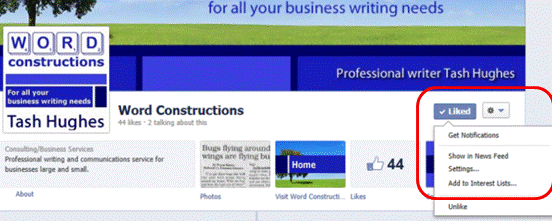
At least they have now added notifications so fans can choose to be notified of updates on a page.
What other options are there?
I don’t see this as a small answer. I never thought of Facebook as that important my business relies on it so I already use a number of other avenues.
But some businesses have put a lot into their Facebook page and could be challenged by looking elsewhere.
The appeal of Facebook is that so many people use it. But how many of those people are really your target market anyway? A targetted option may have fewer users but more of them will be interested so it could offer much more value anyway.
To me, the risk of Facebook (and similar sites) is lack of ownership. You don’t ‘own’ your Facebook profile in the same way you own your website. Facebook can change the rules or disappear, leaving you without all you built up.
One way to keep using Facebook but have less reliance on it is to add ‘like’ buttons to your site.
That means people can still refer to you and your site to their Facebook friends but traffic comes to your site, not your Facebook profile.
Chris Syme offers a number of good ideas in a recent blog post and I’d add a few more:
- get involved on some popular blogs – leave comments and interact with the blogger and other readers
- do some guest blogging
- find some forums that suit your niche and become active there – it’s a smaller audience but targetted
- if using any social media, keep a focus on your website so you don’t lose everything if the platform collapses or becomes unusable
- develop and maintain an email list
- promote yourself offline as well – ads in local newsletters, sponsor local events and hand out business cards appropriately
What would happen to your business tomorrow if Facebook suddenly wanted to charge too much for your page?
Do you have other viable options already in place?


How much mud do you have to throw?
If you throw enough mud, some of it will stick
I have no idea who first said that, but like all clichés and sayings it contains a lot of truth – and can also distract from the truth.

Even when you hit the wall, some mud just slides off…
Businesses throwing mud
I am reading a book on freelancing at the moment. The author, Kris Emery, writes about her early days as a translation and transcription freelancer by saying her approach was to throw a lot of mud.
However, she ‘threw a lot of mud, but just not in any particular direction… [she] didn’t have the big picture really figured out’.
I don’t think Kris is alone in not setting plans or specific goals for her business – I know I haven’t always had clear goals, either, and that it can be easy to get caught in all the everyday details and forget to keep a direction and goal in mind.
A direction and goal also helps keep the motivation and passion up so it’s important.
Do you have clear goals and ideals for your business?
How often do you review them?
Aiming your mud throwing
Kris went on to write ‘If I’d had just one focus, one goal to focus on, it would have been a heck of a lot easier. Cutting my losses was empowering and helped me gain that focus.’
Everyone is busy these days, and often being busy can get in the way of creating and following a strategy.
But how much of that is just busy-work and unimportant? How much is perhaps important but not targetted at heading towards the right goals?
By setting a focus in one direction, it is easier to aim that mud so some of it really will stick and easier to walk away from those tasks (and clients) that are busy work or distracting us.
I know that I got some focus back from attending PB Event and have dedicated more time to backend tasks that had been added to a list of things to do ‘as soon as I get time’. It is possible to make time when you have priorities set – simply stop wasting time on the non essentials (ie cut your losses) and accept small pockets of time add up to mean a lot.
What sorts of things help you regain some focus and motivation?
Do you think you are aiming your business’ mud or just hoping for the best as you throw?
*Image courtesy of BigStockPhotos
Avoiding fluff keeps the message clear
Whatever message you are trying to convey, the clearer you can make it the easier it will be to understand and remember.
Generally, a shorter, simpler sentence will explain a message better than a long, complex sentence. Or paragraph.
Giving unnecessary options
I recently came across this sentence on a website form: ‘credit card details only needed if posting this form’.
It seems simple enough – we don’t need your credit card details if you send us the form electronically or by courier pigeon. So if you’re not posting the form, save yourself the trouble of filling in half our form is the subtext.
One slight problem though – there was absolutely no way to submit their form except by posting it. The form was just a pdf to print off – there was no online submission nor was there an email address or fax number to be seen on the site.
So what they’re really saying is ‘fill in the credit card details’.
Check if it is needed
I think it’s pretty simple – if the information is meaningless (like credit card details for unavailable options) or useless, delete it.
Sometimes it’s a matter of reading through your words point by point and testing them out.
Sometimes it works better to list what is necessary then go to the text and assess everything not on the list – it may add value so you keep it but otherwise, delete it.
This is just as important when you change something as when you first write it.
In our example above, they may have had email details on the site but removed it to reduce spam and forgot to update the form reference.
When’s the last time you filled in a form on your site or followed your sales process to check it all makes sense and works? Did you read every word to be sure nothing pointless is in there?


being vague builds anticipation – or annoyance?

A clear sign for the end of the metcard for trains in Victoria
I’ve travelled on some trains lately which is not something I do very often these days (working from home doesn’t require a lot of train trips!) and read some messages about the new ticketing system.
Now, I called it a new system because it is replacing our old system but it has been in use since the end of 2009! Basically, the myki card is an electronic contact system for public transport throughout Victoria instead of our old metcard system.
Myki has been phased in and many people were still using the metcards earlier this year.
Notices in trains
At each end of train carriage in Melbourne, a ticker system gives messages such as the name of stations as the train approaches.
Recently, that is in October and November 2012, I’ve seen the following message:
myki is replacing metcard in 2012
What do you think of this message?
Build anticipation
Sometimes, not giving the full story is a great way to keep people interested and motivate them to find out more.
Like at the end of season a TV show will have Mary heading into danger while John is arrested on his way to rescue her. If you care about John and Mary, you are drawn to see the next season.
So being vague can have advantages.
I’m not so sure that a vague ‘2012’ is good enough for something like ending a ticket system. Especially as I remember 1 July being advertised as the date metcards stopped…
Commitment or safety?
If I tell you that the blog posts you asked me to write will be ready at 1pm on Monday, you have a clear expectation. And I have made a commitment so will provide the blog posts on time.
If I had told you they’d be ready on Monday afternoon, I have given myself a little more time to get them finished but you still have a commitment to rely on – you know you will have them by Tuesday morning.
Would you be very impressed if I said ‘yes, I’ll write you some blog posts this month and let you know when they’re ready’?
There are times when you can’t be sure of a delivery date so you use less concrete references to save problems and complaints – it gives the business a safety net really.
Maybe I’m just cynical but I think too much safety net behaviour reduces your credibility and people don’t trust you. We have respect for someone brave enough to stand up and say “I will do this by this time” – even if they later adjust the timeframe a little.
So I am not impressed by a message that myki is replacing metcards in 2012.
2012 covers 12 months (10 of which have gone!) and 365 days.
2012 doesn’t give me clarity of when I must change systems. It feels like they have no faith in meeting deadlines so have extended it as much as possible to protect themselves rather than push to meet it.
I think even ‘myki is gradually replacing metcard during 2012’ would have been better if various dates were involved for phasing in myki. Or update the message during the year to be more specific, such as ‘metcard not for sale from July’ and ‘metcard readers now deactivated’.
Make your commitment
What do you think of this public message?
Does something so vague give you enough faith to trust the system? Maybe it seems reasonable to you?
When you are choosing suppliers, how committed do you expect them to be?
Launching a new product to success
I have just heard the recording for Shayne Tilley’s sessions from Problogger Event. Well, one of his sessions anyway!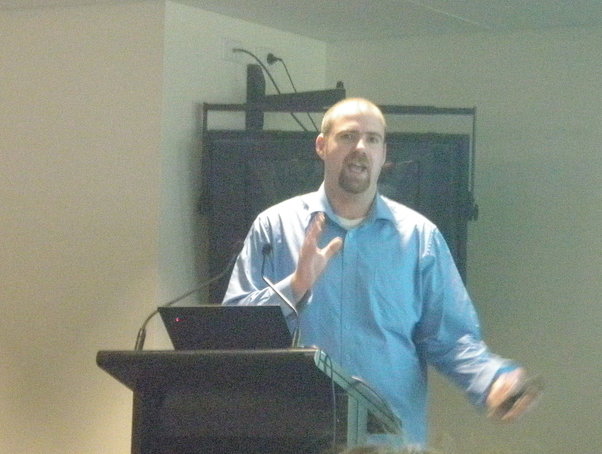
Shayne calls himself a problem solver, or the internet marketing ninja, and is an expert at launching new products such as eBooks.
The session I have just listened to (and attended in real life at the event) was about launching and marketing an eBook.
eBook launch tips…
I think a key message from Shayne was that the best launch plan is individual – each person needs to mould their own launch to suit their situation.
In other words, don’t just copy others and don’t expect the same results either.
Depending on your topic, following and personality, different approaches will suit your launch better than others.
Other tips I picked up from Shayne include:
- build relationships with people in advance so you have an audience to launch to – this will help build momentum and sales
- get to a point where your product is ready – and then leave it alone and organise your launch. In business, done is better than perfect
- get an objective opinion of your launch plan and materials by asking someone else to read over them and give you some honest feedback. Even if they only catch a typo or two, it’s worth it – and they’ll probably point out other things to be added or improved
- prepare your audience – build up some anticipation and have them receptive to the message when you send it
- get the technical sales process sorted out well in advance so it is easy for people to buy from you once you launch
- don’t launch anything else until the interest in your first product has dwindled – if you can make the initial launch last longer, all the better for short and long term success so don’t divide your efforts with a second launch until the first is definitely finished
Your launches
What have you launched, or been involved in launching?
Do you have additional tips to add to Shayne’s list?
If you want to be notified next time I launch an eBook, please subscribe to my blog – I promise I’ll give you lots of communications information in the meantime, too!
Or if you want more tips from Shayne, grab a ticket to the recordings of the problogger event – for $199 you can heard Shayne talk about preparing an eBook as well as launching it as well as 20 other sessions.
How do you say Merry Christmas?
 It’s November and that means we’re heading into Christmas – and for many businesses, creating Christmas-related content and other planning and preparing is already well underway as selling Christmas comes before the actual date.
In a multicultural world, should we say Merry Christmas?
Most of us don’t want to offend those who don’t believe in Christmas. Yet that shouldn’t have to mean we can’t acknowledge and celebrate it with those who do believe in it.
In countries like Australia, Christmas is an important part of our year – so many family gatherings and end of year events get caught up with Christmas and the start of summer. We have national a holiday for Christmas Day and Boxing Day – for many, that translates into a week off between Christmas and New Year Day, too, even if you are not Christian.
And kids get excited by it – whether they are Christian believers or not – so it’s pretty hard to ignore.
How businesses can say Merry Christmas
‘Happy Holidays’ doesn’t work too well – Americans talk about Christmas as a holiday more than we do, and not everyone takes Christmas holidays (it’s often a very productive time to work because it’s quiet!)
‘Seasons greetings’ is a little formal to my mind, but it works by acknowledging what’s going on without mention of any religion (ie Christ in Christmas) – and can incorporate Hanukkah and Ramadan which are often close to Christmas anyway.
I’ve seen businesses try a ‘Happy New Year’ or “Hope the year ends well for you’ approach which is well intended but perhaps misses something so loses the impact. It is a good way for non-Christian businesses to give their Christian customers good wishes without compromising their own beliefs and values.
Jenni Ridyard expresses some great views in a recent blog post about giving Christmas wishes.
I like the idea of ‘we wish our Christian customers a Merry Christmas’ – it is politely directed at the relevant people so others can ignore it.
At the same time, I am not offended by signs that say ‘Happy Chinese New Year’ or ‘Happy Ramadan’ so maybe we just have to accept cultural or religious greetings for what they are – an acknowledgement of someone’s beliefs and good wishes to all.
Now is the time to be thinking of your Christmas greetings, so what will you say to customers and suppliers in general? Will you change the message for specific people?
* image courtesy of 123rf
Just how exhausting is a study?
I recently posted about an exhaustive study of twitter users and it reminded me of another pair of words that can be misused.
exhaustive: covered all angles and possibilities
The SES conducted an exhaustive search of the area but found no traces of the girl.
exhausting: to use or consume entirely, to drain or tire
The two day Problogger event was exhausting so I slept in the next day.
I don’t think exhaustive is used very often now; you are more likely to read about something being comprehensive or detailed. Of course, it has a slightly different meaning to comprehensive which means covering a wide range – it can include most or all aspects.
What is your passion story?
Last week, I heard Valerie Khoo speak about her new book, Power Stories, within a ‘booked for lunch’ webinar.
She summarised the eight stories she covers in her book, being stories that are important to know and tell to make a successful business (or organisation or project).
I tweeted tips throughout the webinar, as I do, but thought I’d expand on one aspect of her talk here as well.
The first story is your passion story.

As I shared a few weeks ago, I started my business to share my writing skill. It was designed around two passions – flexibility to be with my children and the drive to have clear communications all around us.
I like helping people not only write well but to communicate effectively. The difference between ‘you can buy widgets from us’ and ‘you will get back two hours a week once we install a widget for you’.
Sharing my writing skills isn’t my passion story. Helping others communicate clearly and effectively is my passion – writing copy for others is just one way I put my passion into practice.
Valerie made it very clear that it is a valuable use of time to sit and articulate your passion story.
Do you know your passion story? Are you telling it enough?
My copy of Valerie’s book arrived today – a sneak peek had me hooked, too, so I am really looking forward to sitting down and reading this book.
I intend adding a review of the book once I’ve finished, but I may well end up sharing various tips from it as I go, too.
Recent Comments