
TashWord
Tash is a professional writer who loves helping people communicate clearly and effectively.

Are there any monsters hiding under your business bed? Or perhaps yours is hiding behind your phone or in the pile of outstanding paperwork…
Laura Patrolino shares a story about the monster under her childhood bed that wasn’t really there when she looked. For a year, she followed behaviours that suited her fear rather than reality or her best interests.
The question is, do you have monsters under your business bed – that is, are there behaviours you follow in your business that are based on fear rather than a solid business decision? Or maybe behaviours based on misinformation, outdated ideas or factors that no longer apply (for instance, it may have made sense to work at night when you had a toddler under foot in a home based business but not now that your child is a teenager and you work full time business hours).
Have a look at what you do (and don’t do!) and think about the reasons and emotions behind them. You may find writing some procedureswill help you identify processes based on something other than efficiency and effectiveness.
So did you find many business monsters?
What does an annual report mean to you?
For many people an annual report is boring and they don’t read those they are given (such as from a superannuation fund or employer). For others, an annual report is an important part of reviewing investments and companies.
Then there is the group of people who are involved in preparing annual reports…
If you are in this group, annual reports suddenly take on a new importance and can be very intimidating to start. There is the size of the report plus the fact that an annual report is a significant, formal summary of the business.
There is nothing stopping a small or micro business presenting an annual report, but many bigger companies must produce an annual report within a certain timeframe. And that generally means there are specific things to be included in those annual reports alongside the standard financial summaries.
I have written and project managed a number of annual reports now, and I can honestly say it is a lot less intimidating now than when I did my first couple! So here are some of my tips to make writing annual reports a bit easier:
Why do you run surveys or feedback questionnaires?
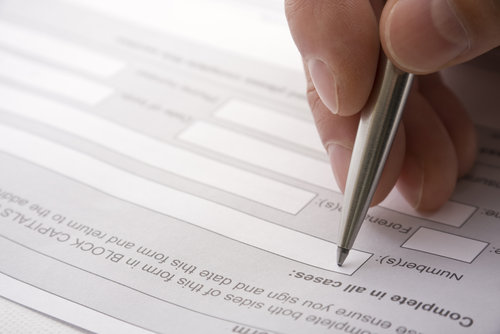
By hand or online, make your survey/feedback questions work for your business.
Sometimes, when I read questions in surveys and other forms, I do wonder how important the final data is for the person behind the questions – do they run them for fun rather than as a valid business tool?
Here are two questions I was recently asked to answer – and some tips on how to avoid the same mistakes…
“When will you purchase a new car?
within a month
1 – 2 months
2 – … months
… – 24 months
never – I don’t purchase new cars”
As we purchased a new car a week ago, I couldn’t give an honest answer to that question – we won’t be buying another within 24 months but ‘never’ is wrong, too.
TIP: make sure you provide an answer for all possibilities, even if one is ‘unsure’ or ‘don’t know’. If your format allows, ‘other’ not only gives options but can gain more insight for you.
“Can you tell us if you are pregnant? Yes No”
Yes I can tell you but the yes answer may mislead you as I’m not pregnant and I assume that’s what you really want to ask me about… I could get really pedantic here and note that I CAN answer but choose not to ( writing ‘please tell us’ or ‘Will you tell us’ are grammatically better than ‘can you tell us’).
TIP: Make sure the question is asking for the information you actually want. In this case, the much simpler ‘are you pregnant?’ would have done the trick.
If you don’t plan your questions carefully, the results you get can be completely meaningless. For example, if 5% of respondents bought a car recently and answered ‘within a week’ you may mistakenly think the next week is prime time to sell a car. There is no way you can tell that someone gave a false answer to compensate for questions they don’t understand/misunderstand/can’t answer.
Depending on how you intend using the answers, skewing results like this can have serious implications. For example, if you plan a marketing campaign and spends thousands of dollars in April when the real results showed September to be effective, you’ve wasted money (in the survey and the marketing). What if you base a new product or pricing structure on the answers collected?
Checking, editing, proof reading and rechecking your questions may seem tedious. The details in faulty questions that I occassionally point out may seem trivial.
I suggest you always get someone else to read your questions before you finalise any form or survey. And, yes, this is a service Word Constructions provides…
“Never ask your customers to do something that you, yourself, wouldn’t do” GuyKawasaki.
A useful quote to remember when working on your business communications. It may sound really obvious and simple, but I know I have often come across businesses where they do ask more than I am willing to give.
Here are a couple of examples of businesses asking too much of customers:
Do you have any examples of being asked too much? How did you respond to those businesses?
Next time you are reviewing your website, brochures and other communications materials, ask yourself if you are asking more of your clients than is reasonable.
Tomorrow is the first of July and first of a new financial year.
One task I noted for today was to check my odometer readings so I can finish last year’s care records and start this year’s. Even if you don’t use the car a lot for business, it is still useful to note the readings at this time of year.
What other things do you need to take note of today (or tomorrow) to track your business for marketing and growth purposes, as well as accounting purposes?
I just followed a link to a site about a small business expo/summit to see if it would be of value to me.
The link showed a list of presenters but where and when were more important questions for me. Fair enough, I followed a link so I didn’t go to an introductory page so clicking to another page is reasonable.

Link important information carefully
“Where is event” is in their menu which is fantastic so I now know it is in Sydney.
It took 5 more clicks (including clicking on the “program” link in the menu – the program just lists times on a Wednesday…) before I found it is on July 27. To be fair, I then checked the home page but it isn’t listed there either.
It’s a pity an event supported by big business and with Government speakers can’t make it easy to find critical details on their website, but it’s another lesson for those of us responsible for communicating to clients and prospective clients – identify the key information and make it easy to find.
Making key data easy to find is more than putting in on one page, too – if people enter the site at different pages or read a few pages before looking for the key data, you want them to find it easily too.
So include key data on every page (in a footer or a graphic for example) or have a clear menu item on every page.
What is key data? Well here are some examples:
How do you react when a website lacks (or hides, deliberately or by poor thought) key details you are after? And, no, I am not going to that expo (although not entirely because the date was obscured).
Unfortunately, we have seen many instances supporting contingency planning this year – earthquakes, floods, fires, tsunamis.
Wendy Davie has shared a tip from a Christchurch client which I think is great. Having a disaster kit somewhere accessible but protected could be highly valuable in a natural disaster or other catastrophe, and Mary’s idea of using a wheelie bin is blindingly simple.
I wanted to say I love how we all respond to someone grabbing the obvious as a solution to something. A wheelie bin has obvious advantages for a disaster kits (waterproof, portable, easy to get, affordable) but how many people actually thought to use one like that? I see it as a good reminder to stop over thinking things, maybe step away completely and be a little creative – you never know what you’ll come up with!
While Mary’s idea was about life-saving disaster supplies (water, blankets, first aid, and so on), a similar concept could apply to business, especially businesses in disaster prone areas or at least in areas on high alert. If a disaster occurs during business hours, the same materials will be important (water, first aid kits, batteries, pen & paper) for the safety and comfort of you and your team. But, as a business, you may include a few extras such as a list of contacts (including contacts for all employees and their families), a copy of your contingency plan and checklists and weekly back up discs (if your kit is secure enough).
What’s your ‘wheelie bin’ idea for contingency planning?
Having a guest blogger write in your blog has advantages for you and your readers, but how do you find the right person to do some guest posts for you?
You may be lucky and have someone offer to do some guest posts for you when you are ready for them, but if you want a guest blogger without any leads for one, here are ideas for finding a guest blogger:
Good luck – and let me know which of these ideas worked for you in finding a guest blogger for your blog.
The headings you use in blog posts, tweets, articles, ads, media releases and the like are a critical aspect of your ongoing success. This also includes sub-headings, titles of tables/images and other stand-out text.
 Busy people will only read on if the heading promises something they value right now.
People surfing the internet will only read more if your heading catches their attention, and holds it.
So it is worth putting some effort into making your headings enticing so you maximise the number of people reading whatever your heading leads to. Here are some tips on making your headings more effective:
Can you remember any effective headings? Do you know why it was effective?
Recent Comments