
TashWord
Tash is a professional writer who loves helping people communicate clearly and effectively.

A few days ago, I raised the question of reading guest blogger posts in a favourite blog.
I think there are a number of reasons to value a guest post in a blog, although I do agree that too many guest posts could detract from the person I visit that blog to hear from.
If the guest blogger is filling in for my favourite blogger so that I continue getting content, that consistency and committment is of value to me. Of course, this is of less importance if the blog is erractic in providing content anyway, but we’ll ignore that for the moment!
Assuming that the blog has carefully selected any guest bloggers and the topics they post on, then the guest posts could provide me with an alternative point of view which can be really useful. It could also provide me with a new blog to read and gain information from.
A different person writing may also inspire different people to comment on my favourite blog which again can lead to new conversations, ideas and leads.
And on a more superficial level, if I comment on a guest blogger’s post, that guest blogger may then know of me and my blog…
While there are obvious advantages for the host and guest bloggers, I think guest blogging also holds advantages for the readers. What do you think?
While there are a number of factors involved in a successful email campaign, I think there are two important points to remember in every marketing email you send out.
1. keep it short – no one is going to read an email that is full of text for pages. Keep sentences and paragraphs short and as few of them as possible, then use white space and images to make it look appealing and quick to read.
2. focus on getting them to do something – usually the call to action is to phone you or visit your website as that is where you can then provide a lot more information
I just read a newsletter that arrived a couple of days ago and spotted a huge error. They provided a recipe, introduced it, gave the heading of ingredients and then listed the nutritional value and method. Literally.
In other words, not one ingredient was listed – some were explained in the recipe itself but most didn’t have quantities listed and ‘dry ingredients’ could include a few things!
So learn from their mistake and check you always include all the important details – then check again as part of your proof reading!
Last week I found a blog post I just have to share – Skelliewag gives 50 tips for decluttering your blog (yes he posted this list a while ago, but it still applies as far as I’m concerned!)
He raises some great points, such as not including stats (as you rather than your readers care about them) and irrelevant social media conversations in your side bar. And I love his suggestion of having a traditional links page if you really want to list a lot of blogs somewhere.
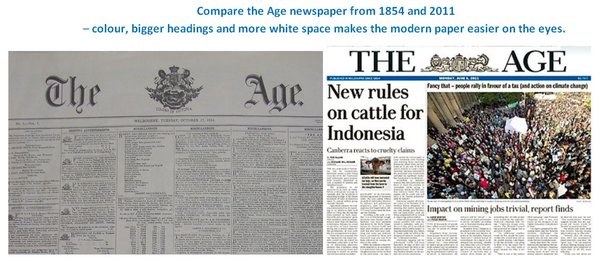
Having less stuff around your writing gives more white space and less visual distraction – maybe I’m biassed, but I think that is better for highlighting your content. I do think about where to put things on my blog and avoid having too many plugins, but I hadn’t thought of decluttering like this before reading Skelliewag’s post.
One interesting point was to have a categories/tags cloud OR a categories/tags list – not both. I think that both is excess information, especially if you want to declutter and have more clear space around your blog. Personally, I would choose the list because it takes less space and is visually less cluttered than the cloud. On top of that, the cloud is based on bigger text on most popular words/phrases meaning that those words will give you a long list of posts to search through if trying to find something specific. Have you ever clicked on one of those clouds to find anything anyway? I know I haven’t (in fact I actively ignore them, but that’s just me!)
And I like the logic of getting rid of any advertising that doesn’t really pay well – it is nicer for readers to see fewer ads and does make the remaining ones more effective. I find a lot of ads in a blog distracting and prefer to see a clean page focussed on the content, so it makes sense to me to use fewer ads.
Most of his points already apply to my blog, phew! I will review the rest of his list and make decisions on whether to keep or lose some details. So if you think my blog is too cluttered or want something removed, now is the time to tell me!
* Images courtesy of Dysprosia and WikimediaCommons
It amazes me sometimes how people ignore some of the little details that are so easy to deal with.
I read recently that someone would never take advice from a financial planner who can’t afford a quality tie (bad taste is a different issue, of course!) My equivalent statement is that I would never hire someone for SEO help/advice or other digital services (social media marketing, web design, ecommerce, etc) if they can’t be bothered setting up a non-hotmail, non-yahoo email address – Gmail and IP provider emails are not really any better.
The blog I looked at yesterday came to my attention by the owner asking for guest blog posts. He provided a domain name and his Hotmail details. Why on earth doesn’t he have an email based at that domain name? Especially for someone claiming to know about SEO?
This is a pet peeve, but there are some valid reasons to use a domain-related email address:
Sigh. That’s my immediate response to a blog post I just read – sigh.
Doesn’t give a good impression of that blog or writer does it? Every time you write something that goes public, it affects how people view you – yet some people just don’t seem to get that. What’s worse is that this was a guest post on another blog so I assume they didn’t review it before accepting it. Silly as I closed the site after this post, and the rest may be great for all I’ll ever know…
I started reading the post in good faith but the poor expression made me skim the second half rather than read it which is never a good sign. I honestly only kept reading because I hoped the content would improve and justify it’s existence on a site I was reviewing. It didn’t.
Although appearing to be an article giving information, it was a poorly disguised ad for why company X is a good choice for design work – namely because they are young designers. I commented back as I don’t believe all young designers are good, nor all experienced designers lack passion.
Had I been given that article to edit or at least comment on, my suggestions for this article would have been:
Just as I was leaving the page, I noticed the writer’s bio and sighed again. Nearly every word started with a capital letter (which is so annoying and completely unnecessary) and he claimed to be a ‘professional content writer’. With that example of his writing skills, he is not making a good impression for himself or the web design company paying him to write this article.
How do you respond to such poor examples of work?
Many blogs use a guest blogger from time to time, some use guest bloggers all the time; in fact, Matt Coddington suggest that just about every blog will include a guest blogger at some point in its lifetime.
A guest blogger simply means someone else writes a post or series of posts that are published on another blog. For example, I have done some guest blog posts at The Study Gurus. Sometimes it is one or two posts, sometimes there are many posts in quick succession and sometimes a number of guest posts are added over a longer period.
As a reader of a blog, why would you read a guest blogger in a favourite blog? Or would you actively not read it at all?
Believe it or not, we’re almost half way through 2011 and the Australian (and others) financial year is about to end.
 As you may be reviewing budgets now or planning ahead for a great 2012, I am offering everyone who reads my blog a 5% discount for any business writing project booked between now and 30 June (for completion by 1 August 2011).
This could be for a series of blog posts, updating your ‘about us’ page or ghost writing your eBook through to project managing your annual report. Simply email me with details of your project and mention you read this offer on my blog. Or leave a comment and I’ll email you from that.
Consider this my end of year sale and my gift to your business planning for 2012.
It’s an officious sounding word for many people, and certainly a daunting prospect if you have to write or update the manual for your business. So much so, that people often avoid having a procedures or operations manual or just call it something less intimidating.
Which raises the first question – what is a manual?
Really it is just a collection of ideas and instructions to help operate something efficiently. It may be boring to read the manual that came with your new iPod, phone or TV but it is very handy when you can’t figure out how to set it up or use the advanced features.
Manuals range from a few pages long to hundreds and even thousands of pages long, depending on the purpose of the manual. Obviously the manual to run a multi-million dollar business will be longer than the manual for your home printer, but the concept is the same.
Here are a few tips to make the concept of a manual less intimidating in your business:
If you are starting a new manual from scratch, you have the advantage of making it friendly from the start, and preparing procedures and style guides doesn’t have to be frightening either!
Thinking about manuals you’ve had to use in the past, what were some of the big issues with them?
For me, once you take out emails and website admin tasks (including writing blog content), then my key activity online would be using a search engine to find something. Apparently I’m not alone – this is the most common activity after emailing.
Which of course means that people searching are an important part of your online presence – if your site doesn’t get in search results and doesn’t help people landing on the site from a search engine then you are risking a potentially large market.
What’s more, if someone is searching the odds are they are willing to buy – I know I wouldn’t bother searching for a local dentist unless I want a new dentist or search for ‘computer mouse retailer’ for fun. So it seems logical to me that someone reaching your site from a relevant search engine search is likely to want your product/service. Especially in comparison to someone who is just curious about their friend’s latest social media like or follow.
Given the potential importance of people visiting your site from a relevant search, why would anyone waste their time getting people to visit from an irrelevant search? For instance, I am happy if you found my site (and blog) through a search for ‘business writer’, ‘blog content’ or ‘writing eBooks’ but see no point enticing you with ‘childcare provider’ or ‘dress maker’. It costs me time and possibly money to get found via a search engine so I don’t want to waste it on people who are not interested in my services – and I don’t want to waste their time and put them off side either.
So how can we help get the right search engine results? Here are my suggestions, and I’d love to hear everyone else’s ideas, too, as I won’t say no to more targetted traffic, either!
Of course, it is crucial to write contact of interest to real people and tweak it for search engines rather thna write for search engines and hope people find the hidden meaning.
How else can you get good search engine traffic to your site/blog?
Recent Comments