

Welcome!

I hope you find my writing and business tips and observations useful. My business and blog are dedicated to helping businesses communicate clearly and reach their potential. Read, and enjoy!Tash

Refer to older posts…

Blogging services

Being a leader

Last night at cubs, I spoke to the pack council ( a group of older cubs given the responsibility of leading groups of their peers) about leadership.

Leadership characteristics

Leadership skills

Asked ‘what is a leader?’, their answers included:

  1. someone who sets a good example
  2. someone willing (and able) to help others
  3. someone who does jobs to get things done for the group
  4. someone who doesn’t have to be at the front or look like they’re the leader

In a coincidence of timing, I just read a summary from the current ASFA National Conference* and noted two prominent speakers discussed leadership.

Alexander Downer is quoted as saying that consultation is important but “leaders had to have courage…[and] implement their plan.”

General Peter Cosgrove followed on with “sometimes you can opt-in, sometimes you can opt-out, but sometimes leading is unavoidable…Leaders were able to continue to lead even in times of turmoil.” The summary also states General Cosgrove ‘pointed to the importance of professionals to lead saying that no matter how daunting and overwhelming, professionals had to ask the rhetorical question “if not you to show leadership, then who?.. You are in position, you can’t avoid responsibility.”’

That’s leadership from the young and publicly experienced – what do you think leadership is? Is leadership a role or behaviour? Are you the leader in your business?

* ASFA is the Association of  Superannuation Funds of Australia and they run an annual conference for leaders in the. super industry

Understanding is important

Do you think there is a significant difference between understanding a task and being able to do it with skill?

I would never pretend to be able to write and design a PDS for example – I hire a professional designer for the design aspects of the job – but I understand many aspects of making it effective (such as using white space and images to make it appealing, avoiding ‘orphans and widows’, being consistent in fonts and headings, and adjusting things to work with page breaks and spreads).

Likewise, when dealing with an architect, I can state functional uses of a space and know that they will match function, materials, space, appearance and reality (i.e. not every idea is really feasible!) I understand the project and outcomes but leave the expert to draw up the plans.

understanding is joyous and uses our brains, whether for social media or not

Marketing and social media

A recent IBM study about marketing professionals showed that only 12% consider social media expertise as critical to their personal success in the next 3 to 5 years. Ross Dawson points out the concern with this figure – how can marketers maximise social media for the business they market if they don’t understand it?

I know I understand social media and its power much better since I started using it. I even remember wondering about the value of blogs and making time to read blogs – until I started this blog and realised it’s potential and how useful other blogs can be.

I think it is ok to get someone else to write your blog posts or monitor your mentions on social media. But understanding these media yourself is important. Why?

  1. if you understand, you can check the people you hire are doing their job
  2. if you understand, you can fill in if your expert is absent for a little while
  3. if you truly understand, you can find ideas and inspiration to maximise use of these media (for example, instead of just tweeting and reading tweets of those you follow, have you searched for leads on Twitter?)
  4. if you understand, you can integrate your brand and message throughout your business – including running campaigns across multiple media
What do you think – do you have to understand something before bringing in an expert to do the task for you? Should marketing people, in particular, understand social media?

No to under construction sites
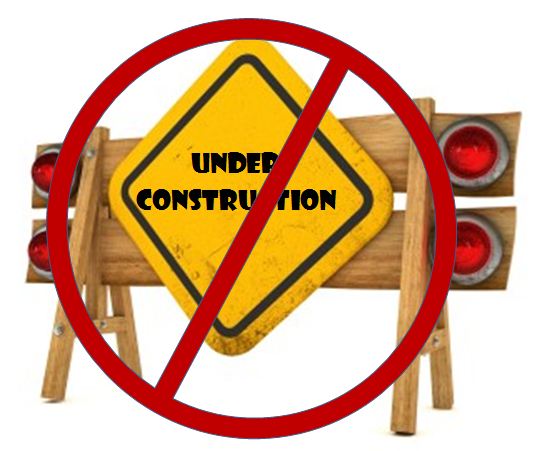
Red cross through a roadworks sign stating 'under construction'I honestly thought most people online know that an ‘under construction’ website is not a good move. Search engines don’t give any credibility to sites with nothing more than a ‘coming soon’ message and people don’t like wasting their time on such sites.

As I posted about in my ‘starting a website’ series, it is very easy to put a simple web page as a temporary site while a full site is being developed. This way you can get onto search engine lists, provide some interest and begin marketing efforts.

So I was very surprised this morning to visit a site I had received an email about.

The homepage has a nice background but twice stated ‘under construction’ as well as ‘temporarily unavailable’ and ‘coming soon’ – that’s a lot of repetition in eight short sentences (one of which was ‘please be patient!”) Other than the business name as a heading, there was no information about what the business does and no real content.

Given I was making a decision about the company, this wasn’t good marketing for them. They didn’t include contact details but at least there were links to their twitter account and email.

Oh, there was no twitter user name or email address attached to the links, so their credibility fell further.

However, the biggest shock was when I clicked on the link in the footer which I assumed was their designer but thought may give me some information. It wasn’t their designer but a site selling ‘under construction’ themes for blogs! People are spending money on pretty backgrounds to put up words that may hurt (and certainly won’t help) their online reputation.

If you’ve been online for a while, does this shock you as much as it does me?

If you are looking at getting your business online, please don’t waste your money on a template or designer offering under construction pages. A plain page with an introduction and contact details will work much, much better.

What did you do while your site was being developed?

Doing the same thing for how long?

One definition of insanity is to keep doing what you’ve been doing and expect different results.

Robin Cangie makes a similar point with “it’s not the metrics. Your marketing just sucks“.

So if you’ve been using Facebook for your business for 6 months and got nothing in your business to show for it. Does it make sense to keep posting on Facebook every day – or is it time to look at other options?

Maybe your Facebook campaign isn’t working because

  • your target audience doesn’t use Facebook
  • your messages are too social and not enough about your business industry/expertise
  • your profile is all about you and not helping customers
  • it leads to a website that isn’t good at converting leads to sales
  • one of many other possibilities

Measuring marketing (whether social media or otherwise) is important, but not more important than running good marketing efforts in the right place at the right time (yes, the 4 Ps of marketing still apply).

Every time your marketing results are less than expected (or desired), you need to decide whether the poor results are due to a short time frame (looking at results too soon can be misleading), inaccurate measurements, a poor campaign or something else. From that, you can decide to continue the marketing, adjust it or stop it.

Going back to our Facebook example, something has to change. Maybe it is move to another social media channel (where your audience actually spend time) or maybe it just needs a new approach.

“There’s no point flogging a dead horse” applies to marketing, too. However, you must give each campaign a chance – no additional sales after a week on Facebook doesn’t mean Facebook is a poor strategy for your business. Sometimes it is a slow process to see results from our actions.

How do you judge when something has been tried long enough to move onto a new strategy? Or do you just keep trying the same thing even when there is little chance of success?

Communicating burning messages

Driving home form a meeting on Monday night, I heard a radio program about treating burns. The content was interesting enough but one comment in particular made by Lara Harvey (BSc, MPH, PhD Student) really stood out for me.

From a survey, they have determined that most people learn first aid (and specifically first aid for burns) from first aid manuals/books (43%) and the internet (33%). {I am in the minority to have done many courses apparently.}

However, if you do a burns treatment search, the answers are not consistent. That is most sites will tell you to treat a burn with water but they vary in how long you need to do so for. {Glad to say that I teach cubs the time experts want people to know!}

Lara asked (and I’m paraphrasing as I don’t recall her exact words) “How can we let people know something so important if there is an inconsistent message out there?”

I often write about the importance of consistency within a business or brand, but there is a broader issue of consistency within an industry or topic. It only takes one person to write the wrong fact for that message to get spread and potentially cause trouble – in this example, the trouble of not cooling a burn for long enough, but it could damage an industry’s reputation, give customers unrealistic expectations or have people using products inappropriately.

There are no rules for the internet – anyone can set up a website and put whatever content they like on there. If they make it look good and promote it well, they may just get it seen by many people and influence them even if they don’t have the appropriate knowledge to start with.

Likewise there are no updating rules – a knowledgable person could upload great information but maybe it is now out of date. How does the average internet viewer know the information has changed?

So do you have any suggestions as to how consistent messages can be reported on the net? 

How did you learn about treating burns and other first aid treatments? Do you think it was effective?

ADDED NOTE: The correct first aid for a burn is to put it under cold water for 20 minutes. Running water is best (although jumping in a pool or other big volume works well, too) but even a bucket of water is better than nothing. Ice and creams are not necessary and can make things worse. Severe, chemical and large burns need medical attention. Only remove clothing if it is not sticking to skin. Keep the patient warm and offer them water to drink.

Your industry writer

As a professional business writer, I sometimes am asked if I have experience writing content for a specific industry.

While I could give a yes/no answer to each person, depending on the industry they are asking about, the reality is that being an experienced writer is more relevant that my industry knowledge.

different industries - engineer, dentist, dressmaker, accountant.

I am not an engineer or dentist, a seamstress or accountant, yet these are some of the industries I have successfully written for

Don’t believe me? Well think about these points:

  1. expertise in multiple fields (e.g. writing and science or superannuation) is harder to find – and should be unnecessary as the client is the subject expert and the writer is just making it read well
  2. someone outside of the industry can provide more clarity about how customers will perceive information (For example, people in superannuation and insurance talk about ‘benefits’ in a way that the general population doesn’t, so as a writer I change ‘benefits’ to ‘payments’ for clarity)
  3. a writer’s job is to communicate a message clearly and effectively
  4. good writers know how to research, and to read information to find the relevant points to put into a message
  5. a lot of business content is actually generic and doesn’t need a lot of industry knowledge – website home pages, ads, media releases, profiles and brochures are about the business and marketing so a lot of technical information isn’t used
  6. experienced writers are used to meeting guidelines and choosing words carefully so can manage even in tightly regulated industries – just tell the writer  any rules and then use your usual due diligence checks. Good writers can use words well but avoid misleading people so may meet the regulations quite easily anyway

In comparison, we need some trees removed at home. We want a professional tree lopper who will do the job safely and appropriately – I don’t care if they’ve chopped down the same type of tree before. Likewise, I don’t insist on a hairdresser who only does long, wavy hair or a graphic designer who has experience with other writers’ websites.

If you need writing help, you will find it much harder to find a suitable professional if you limit it to those with industry experience. Concentrate on finding a good writer and providing them with the relevant facts for a project (or at least reliable sources of information).

Do you disagree?


* Images collated from Microsoft Clipart

Check your titles

I saw some You Tube videos this morning with my son and one stood out for all the wrong reasons.

As the video started, a title screen showed “Here’s are friend”. After rereading it, I decided it was meant to be “Here’s our friend” and the lyrics within the following video confirmed my assumption.

The associated description included some more gems, such as “go’es” and “cellerbrate” and “there” instead of “their”.

In this case, it was not a business and professionalism probably wasn’t a major concern for the video poster. However, if you are going to the trouble to make a video and put it online for people to view, surely it’s worth the time to get the title correct?

Errors in content are not desirable but major errors in a title destroy credibility and may prevent anyone moving beyond the title so having good grammar and spelling in a title is important.

Have you seen poorly written titles that stopped you using that resource (document, video, etc)?

Carbon pricing your business

beautiful coast line

The carbon tax should be protecting beautiful places like this (Ricketts Point in bayside Melbourne)

Have you thought about how the Carbon tax will impact your business and pricing structure yet? Will you update your web content to mention carbon pricing?

Now that the lower house has passed the carbon tax legislation, we know it’s likely to be in place next July and have some idea about what is involved. For instance, next financial year carbon will be taxed at $23 per tonne and we’ve been told to expect a 0.7% increase in living costs (although some or all of this may be covered with tax cuts and increased Government payments). The price would change the following year, and beyond.

Carbon tax for small business

Small businesses won’t have to directly pay a carbon price like the big 500 corporates, but that doesn’t mean we are unaffected. At the minimum we will face increased power costs and (as I understand it) small businesses are not getting anything in the compensation packages.

How will this impact on your business? Can you absorb the increases or will you need to update your prices?

Personally it will be increased power costs that will affect my business, along with (potentially) higher supplier costs. Only I have no idea what ‘$23 a tonne of carbon’ means for my electricity bill.

For a business delivering goods, buying materials for manufacture or providing mobile services, the impact could really add up.

Capping price increases

As individuals, it is good to know that the ACCC will be watching for price increases above 0.7% (where labelled due to carbon tax) so we aren’t ripped off. As business owners, it’s tough – will our cost increases be less than 0.7%? can the business afford to pay the owner(s) more to help with higher living costs? can I increase my prices and increase additional costs (e.g. delivery) by 0.7% each and be operating legally?

It sounds simple – use a lot of carbon, produce a lot of greenhouse emissions, and pay for it. Implementing it into real business practices is going to be harder.

So what are your thoughts about small business pricing next year? Any idea how your business will deal with it?

PS You can learn more about carbon pricing, it’s value and climate change through COs Australia’s You Tube channel.

Getting lots of questions

Have you ever experienced a LOT of questions from your suppliers?

I aways lots of questions about new writing projects – less so for existing and long-term clients – and some people are amazed by that.  Usually amazed and appreciative, but amazed none the less.

Could you imagine going to a doctor or lawyer and not have them ask questions to clarify the issue and find the best solution? Would you trust a doctor who said hello and handed you a script?

As far as I am concerned, I like my suppliers to ask questions to show interest in the project (rather than the dollars) and to be sure they understand what I actually need.

As a writer, I don’t feel I can’t write good content if I don’t know much about the topic of the piece. I know I can’t write effective content if I don’t know who the target audience is or the purpose of the piece. So I ask lots of questions before I write or edit any content.

Although it make take you more time than you expected to hand over a project if the supplier asks many questions, it is usually worth it for the quality of the final result.

Some reasons to appreciate these questions are that the supplier:

  1. is interested in doing the project as well as they possibly can
  2. will clarify any parts of your instructions they don’t understand
  3. learns the purpose of the work and can tailor it to suit
  4. is able to make appropriate suggestions and recommendations
  5. has the knowledge to give a different perspective
  6. gets an understanding of you and your business as well as the specific project
  7. knows who to target the result at (if relevant)
  8. may notice other things you can benefit from (for example, when I read a client’s website to learn about them, I sometimes find a typing or logic error that I will point out so they can correct it)
  9. is being professional and showing attention to details which presumably will carry through into the project itself
  10. is gathering information from the best source rather than making assumptions or using less reliable sources

So be warned – if you ask me to write for you or help with a communications project, you will be asked a number of questions!

How about you – how have you reacted to suppliers asking questions in the past?

Do you respond differently to ‘dumb’ questions compared to a supplier gathering useful information?

Adding depth to your website content

Earlier this week,  we looked at how shallow websites are not as valuable for your visitors or your SEO efforts so let’s look at how to improve that situation.

Shallow content is giving the minimum so by default giving more is adding depth. Simple.

How can you provide more depth to your content?Tablet content form old books

  1. generally provide more information but be careful to not just pile on so much information people get overwhelmed – there is a balance between too little and too much that will vary between pages and sites
  2. link to relevant information (on your site and elsewhere) to enhance your content without cluttering up pages with too many words and facts
  3. consider adding fresh content regularly. This could be via a blog, a social media feed, a news feed, articles or uploading your newsletter.
  4. look at every page of your site and review the content to ensure it meets the purpose of the page and answers any likely questions people would have on that topic. For example, expand on your services so they are meaningful – ‘business bookkeeping and reporting’ is better than ‘bookkeeping’ – and give some background on your about us page.
  5. look for ways to add value to people. Some examples are a hair dressing salon adding hair care tips after each service listed, a legal firm linking to definitions of common terms for relevant areas of law, and a book store including guidelines to the age suitability of each book
  6. only create a new page when there is something to add – new pages created with the same information focussed on a different keyword is not adding value and is more likely to annoy humans and search engines
  7. where relevant, add reviews and testimonials to your pages as they provide relevant content from a different perspective
  8. if you can’t see how to add depth, but suspect you need to, get others’ opinions on various pages. Remember your target audience when choosing who to ask
  9. following the usual rules of easy reading (good spelling, grammar, flow and being concise) will make any value stand out better than a page of words that are hard to interpret – sometimes adding value is done by removing the junk!
  10. add tips and ‘how to’ notes where relevant – for instance washing instructions with every clothing description and alternative uses alongside certain products can provide true value to people and potentially increase your sales
What have you done to add depth to the content on your site? Do you think this is something to get help with or easy enough to manage by yourself?