
TashWord
Tash is a professional writer who loves helping people communicate clearly and effectively.

Creating an eBook may be easier than printing a hard-copy book, but it still takes effort and skill to make it a good eBook.
Writing an eBook appeals to many people, but not so many have done it. Is it something you have been thinking of doing?
The following eBook tips come from a ProBlogger webinar I participated in at the end of July. They look short and simple but there is a wealth of information there if you take the time to think about them.
What challenges have you faced when thinking about, planning or writing an eBook?
So I’ve posted about poor template use and given some tips on maximising your use of templates.
But maybe you’re wondering what sorts of templates you could use in the first place. Or whether it is worth the effort to prepare a template.
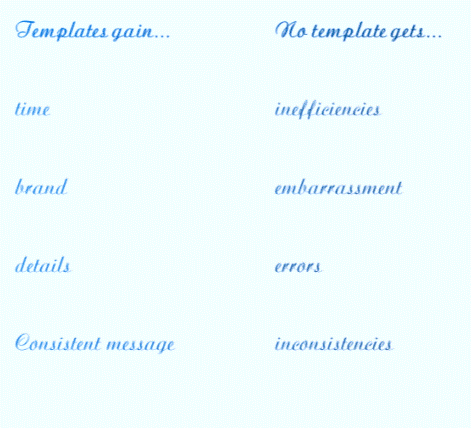
Templates have so much to offer a business…
Templates are great for
Ok, that’s as easy as answering ‘what letters can we use in our business?’
There are many different things that can be put into a template for improved efficiency and branding. So this list is a sample to get you thinking of what can be changed in your business.
What other templates have you used that have made your business life a bit simpler and easier?
Using a template can be a great tool – it saves time, ensures important details are included and builds consistency.
But for best results, each use of a template needs to be tailored to the purpose. Just copying it as is looks lazy and can lead to embarrassing mistakes.
That means, if you use a template…
My advice for templates is to always start with the base document.
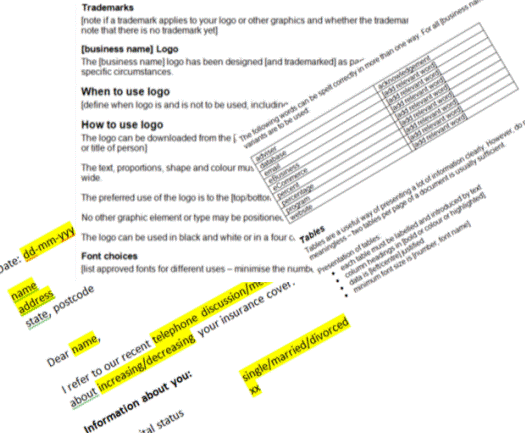
There are various ways to indicate variable text in a template – colour, xxx, brackets, choices…
So if you have a template for competition terms, always use the original template rather than taking last month’s terms and updating them.
It is so easy to miss one field if you update an existing document, leaving a mistake that at best makes you look silly and at worst could have legal or customer service issues for you.
If you find that you are adjusting a lot of the common text, create a new version of the base template to use.
If you find you are often changing text around certain fields, make some of that text variable, too. It doesn’t have to be a blank space, you can provide two alternative sets of words (eg ‘All winners are’ or ‘the winner is’) as part of the template.
A template should be a ‘living document’ in that it is regularly reviewed and adjusted for each use. The first version can be useful but by using it, improvements often become apparent as it is used in different situations.
For documents with very sensitive content (such as legal implications) or to be used by many people of varying skills, consider setting up the document so non-variable text can’t be edited.
Do you have any other suggestions for maximising the use of templates in business?
I may soon be $5,000 richer.

Money pouring into my email – a lovely idea!
Then again, I may not be as I know my chances of winning a competition are somewhat less than 100%!
I just entered a competition, after looking through the terms. I don’t read the terms in full but I always check if there are unexpected uses of my email address before I give it to someone.
In this case, adding me to a single mailing list was acceptable so I entered.
However, I also noted a few things in the terms that were silly.
I think they have used a generic set of competition terms, adding in a few specific details but leaving everything else as it was in the template. To me, this looks like they were too lazy to bother writing or editing their terms.
Let’s assume they had permission to use that template rather than breaching copyright by copying someone else’s terms. They could still face legal issues if something in the template doesn’t apply to their current situation – like how winners are notified.
To enter, I gave my name and email address – no postal address or phone number.
According to the terms, if I win, I will be ‘contacted by phone and email’. Interesting idea given they don’t have my phone number…
A single prize of $5,000 is on offer to the winner. Yet, ‘the prize… is not transferable as cash.’
This competition is ‘only open to everyone worldwide…’ The use of only and everyone doesn’t quite work – presumably it makes more sense for competitions where ‘only open to customers’ or ‘only open to Australian residents’. A quick read of the completed sentence could have shown the wisdom of deleting ‘only’.
[Tweet “Not editing a template to use it appears lazy.”]
Have you ever seen someone use a template without thinking to update all the relevant details in it?
Was the result funny or did it damage the business’ reputation (or both!)?
I often pick up surveys for errors they make – it is unfortunately a common occurrence.
Today I spotted one that used perfect grammar and made perfect sense. The question listed the following options for someone’s gender:
For a question where I am used to see two possible answers (male and female), such a long list surprised me!
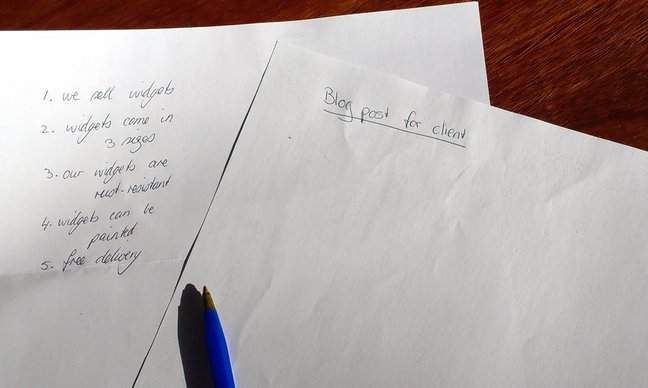
When talking to clients, I talk about writing from their points or from scratch – I don’t list writing blog posts, webcopy, disclosure documents, annual reports and letters. Fewer options make their decision easier.
How many choices make it hard to choose?
For a question with a clear answer (like how old are you or do you live in Australia), a lot of choices can work as you can skim across the options to find the relevant response.
But at other times, a large choice can hamper people actually making a decision.
I think there is a balance between not restricting people, offering them options, and overwhelming them with choice. Especially if some of the options are going to be chosen by a very limited number of people.
In business, too many choices can result in people being indecisive and not buying.
I know it can be hard to not offer something (what if my next potential client wants exactly the thing I don’t mention?) but considering if less is more can simplify and help your customers.
[Tweet “Consider if less is more before giving customers lots of choices”]
You can always add a note somewhere to the effect of ‘if what you want isn’t listed, give us a call’.
So how many options does your business offer?
Have you considered if it is too many, or how it could be simplified?
Yesterday, I had the pleasure of listening to the Problogger webinar. It was not on a specific topic (well, no more specific than blogging anyway!) but was a three person team (named below) answering questions.
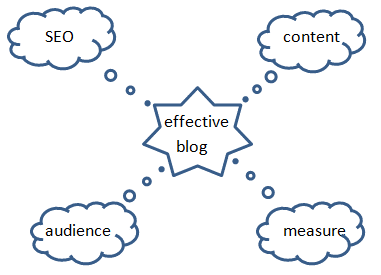
Learning how to run an effective blog
As always, I shared various tips from the webinar on Twitter as I listened, but I am also going to share a summary of those tips here.
Writing out my notes helps cement the ideas in my head, for one thing, but I also like to share information to help others so this post is a win-win!
Obviously, a blog offers little value if it doesn’t have any content so this is a crucial aspect to cover. Shayne and Darren both agreed that content is the priority – you can adjust the layout and visuals of your blog if need be, but poor content really limits the success of your blog.
And always remember that blogging success can take time so hang in there and don’t give up too soon!
While not all blogs have advertisers, for those who do want this income option a common question is whether to get direct advertisers or use something like AdSense. Here are some of the comparisons from the webinar:

Accepting advertising can make you money
Many bloggers have found their blog has led to other opportunities – and many make more money and gain credibility more from those extras. Of course, many other bloggers are happy to just blog or use the blog to support a business.
Problogger is a website about blogging (what a surprise!) started by a Melbourne man, Darren Rowse. Darren and the site have gone on to be well recognised as blogging authorities, with a range of blog posts, eBooks, webinars and the annual ProBlogger conference (and virtual conference attendance) to help other bloggers learn and develop.
Today’s webinar was hosted by Darren and included Shayne Tulley and Jasmin Tragas. Shayne manages Problogger’s marketing and website design/development – and has a one week old baby – while Jasmin produces the eBooks and live events for Problogger.
Between them, this trio has a lot of knowledge and they generously shared some of it with us today.
Some other information gained from today’s webinar included:
Or you can listen to a recording of the webinar 🙂
In an article about Australian Standards on what I thought a national-focus site, the following section stood out…
The retrofitting of automatic sprinkler systems became a mandatory requirement for existing aged care facilities in January 2013. Similar requirements also exist in Victoria and Queensland.
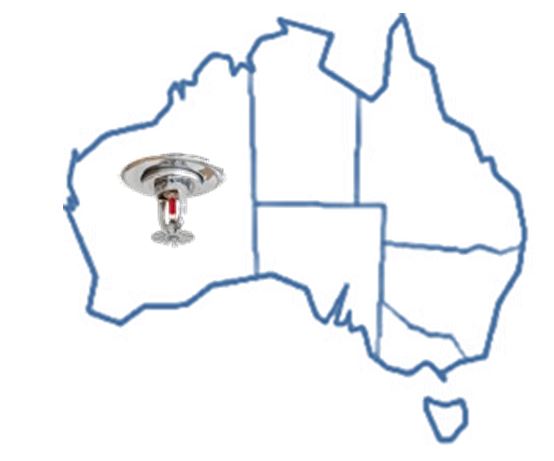
Does a national law only cover one state?
So two states have similar laws to the national laws? Why are the national laws not, well, national?
Or is the author just assuming everyone knows he is writing about a particular state because it is so important and somehow obvious?
Or was something edited out that made it clearer in the draft?
Fire safety is important – but so is clarity so people understand your message.
When proof reading and editing, always make sure you read your writing from start to finish to check the correct context is in place.
A better way to write the above sentence (and I’m guessing which state is the assumed one!) would be…
In January 2013, the retrofitting of automatic sprinkler systems became a mandatory requirement for existing aged care facilities in Tasmania, Victoria and Queensland.
I think it would also be nice to add another sentence along the lines of “The other states are reviewing their laws” or “Currently the other states have this as a voluntary measure”. I prefer to get the whole picture, but that could just be me!
If you want to avoid similar errors, let me know – I offer proof-reading and editing services as well as writing 🙂
We had a baby in the house last night, and it was lovely. Lovely to have a baby to hold but also to see how it brought our family together to watch and care for baby Sam.
Sam even came to a school event with us.
We got some interesting looks at the school, too. My daughter even got comments about being a teen Mum as she did most of the carrying at school*.
Some people smiled instinctively when they saw a baby or the baby carrier, others smiled in a bemused way when they realised Sam wasn’t a real baby. Many people were obviously curious and a number actually asked us about Sam.

Obviously not a real baby, but a close resemblance in many ways
Sam was with us as part of my daughter’s school work – individual students are given 24 hours to care for the baby simulator which cries randomly and needs comforting or feeding.
In this case, it was part of learning about human development although some places run this same program as an anti-teen-pregnancy concept.
The fake baby is about the same size as a newborn, although it felt heavier and bulkier to me – probably because of the electronics in the middle and a lighter head than in a real baby.
We walked around a course/career expo and got a lot of interest – a lot more smiles than you would normally expect and exhibitors had a different reason to speak to us.
Goes to show what an ice-breaker a baby can be – it is pretty much the ultimate way to spark interest! Even (or perhaps more so!) a fake baby.
It got me thinking though – what could a SMB person do to spark a similar level of interest at an expo or other business event?
If you have a baby (or a pregnant belly) of your own, the answer is easy!
Carrying a baby simulator to gain attention is a bit weird – actually it would be a lot weird – so I wouldn’t recommend that. I wouldn’t think you’d get one cheaply, either.
So what can you do to generate sparks of interest before you open your mouth and give an elevator speech or mention your USP?
* The school event last night was aimed at younger students and my daughter had Sam because of an accelerated subject, thus it wasn’t common knowledge or a common sight and therefore generated comments and wonder.
Over the weekend, we were coming home late so dropped in at a country town for dinner on the way.
We chose the pizza and wine club because it looked nice and suitable for a quick family meal.
When the waitress gave us menus, I was pleased to see a Little Golden Book on top thinking it would be a distraction for my children while we waited for food.
However, the waitress told us the kids’ menu was inside the book’s cover!
It was a creative way to present the kids’ menu and would serve to make kids feel special (their own menu) and entertained. Of course, older children may be less impressed – our elder daughter didn’t seem to mind though.
The kids’ menu had a small selection of pizza choices and so on.
But it was the message at the end that really caught my eye. There were two offers we could ask for – pencils and colouring pages for entertainment or a ball of dough to play with!
My children chose the dough – no surprises there!
They had a lovely time playing with the dough while we waited for our food. Then, their creations were taken away and baked in the pizza oven so we came home with bread lions, cars, horses and a rose (my daughter made me the rose – it is sitting on my desk!)
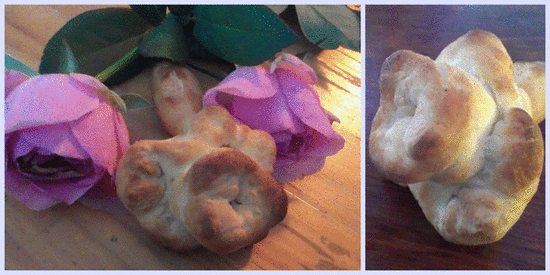
A rose by any other name smells, ah tastes, as sweet…
Have you ever experienced something like a restaurant providing dough to play with?
It was such a great idea – it kept the kids quiet so the restaurant was nicer for everyone. Especially the parents who got to relax a bit more.
It was all done with a smile and obviously is done regularly – they had special baking dishes for the purpose.
The cost for the restaurant would be negligible – what’s a bit of dough in a pizza/pasta restaurant?
The reward is great – happy customers and I bet I’m not the only one sharing the story.
My kids have already asked to go back there…
Lots of places make pizza. Maybe the other pizza shops in Kyneton make as good or better pizza than the restaurant we went into. But have they attracted a loyal following like this?
Do you ‘offer kids dough’ in your business? What do you do that’s unexpected, creative, simple and appreciated?
It’s the little touches in business that can make a huge difference.

Recent Comments