I hope you find my writing and business tips and observations useful. My business and blog are dedicated to helping businesses communicate clearly and reach their potential.
Read, and enjoy!Tash

You can write great client letters
I wrote about an officious bank letter that resulted in me closing my account.
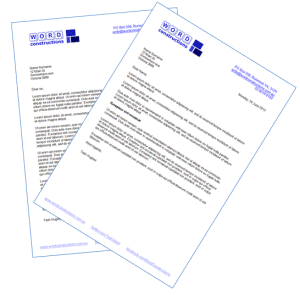
Professional looking letters are part of your brand
There was more to that letter for teaching about good letter construction, so here are some tips for you…
- the letter was on two pages
This was unnecessary, unavoidable and can really annoy readers. It looks longer so is off-putting and is just a waste of effort. With better writing it could easily have been shorter and their letter format included a lot of wasted space. - one line of the letter contained only ‘if:’
It is best practice to avoid a single word on a line (designers call this as leaving orphans and widows), especially such a short word - every number in the letter was written as ‘three (3) years’
Frankly, people can either read or they can’t, so ‘three’ or ‘3’ is sufficient – adding both is unnecessary and looks wrong - first sentence is 3.5 lines long…
It was simply too long, both visually and for comprehension. When in doubt, go for shorter. - lack of clarity throughout the letter
The letter went from the consequences to the definition to the impact for me so it was hard to follow – I had no reason to care about the consequences until I knew the relevance and definition!
Remember to explain the relevance of any information first. They could also have improved it a lot by using a sub-heading for the full definition of inactive account – I could skim that section or read it for details without feeling confused. - a missed personalisation opportunity
The letter stated ‘your account referred to above’ – it’s not hard to mail merge (and they were already merging in my name and address!) so why not use ‘your xyz account’ which is more personal and easier to read - an entire section was irrelevant to me
why include a long paragraph, including two bullet points, on offset deposit accounts when I don’t have one? Setting up a conditional rule on this paragraph would be easy to do so it only goes to relevant clients. Or at least have it under a sub-heading so it doesn’t clutter the main letter and distract from the meaning
A drop of honey in your writing works
Some years ago, I opened a saving account with a higher interest rate for the proverbial rainy day. I haven’t used that account much for some time but received a letter from that bank that I wanted to share.
Threatening feel

Threatening people’s savings doesn’t create a good impression
With opening words ‘Inactive account’, the letter launched with a long paragraph about money in inactive accounts being transferred to ASIC. The paragraph ended with a ‘by the way, the Government recently changed the inactivity period to 3 years from 7 years’ message.
It went on to define in active accounts.
Followed by a sub-heading “Your inactive xyz account”.
At this point I was angry because I hadn’t been told about the change in law nor that my money would be transferred to ASIC so “how dare they do that”.
The letter then mentioned I could prevent the transfer by using my account before the end of January.
Why not tell me that first as it is actually the most important thing for me to know?
And encouraging me to make another deposit is surely in the bank’s best interests, too?
Why let me get angry and annoyed rather than show me they are trying to help my keep my money?
The harsh letter made me uncomfortable, and as I only had a small amount of money left in there, my response was to withdraw all my money and close the account myself.
This is obviously a necessary letter for banks, but I think they are missing a relationship building and marketing opportunity to write it in such harsh terms.
Even if most people still closed their accounts, they would do so without negative feelings towards that bank…
It could have been personable and helpful

Being friendly builds goodwill and reduces stress
In contrast I recently wrote a letter for a client along similar lines.
That letter effectively read:
You haven’t made a contribution for some time so your account is about to be classed as inactive.
If you make a contribution by xx, your account will be reactivated. Otherwise, your account will have to be closed.
Another option would have been to write:
Did you know that any account without transactions for 3 years are classed as inactive? And that we have to transfer money in inactive accounts to ASIC?
To avoid this for your account, please make a deposit or withdrawal by xx.
Or they could have focussed on the change in law as important news:
Did you know it’s been nearly three years since you used your account?
The Commonwealth Government recently changes the law so accounts are classed as inactive after 3 years rather than seven. That means your account could soon be classed as inactive.
By law, we must transfer money from inactive accounts to ASIC.
Of course, you can reactivate your account by making a deposit or withdrawal before xxx.
Which version would you prefer to receive?
* Images courtesy of kozzi28% young drivers killed
In 2007, 28% of Victorian drivers aged 18 – 25 were killed.

Alcohol is a factor in the road toll, especially for young drivers
What a terrible statistic.
It’s also pretty surprising – at 30 June 2006, 902,796 Victorians were aged 18 – 24. 28% of that is 252,782.
The Victorian road toll in 2007 was 333.
So I looked at a Victorian Government website and found this sentence:
While 18 to 25 year olds represent around 14% of licenced drivers, they accounted for approximately 28% of all drivers killed on Victoria’s roads.
28% of the state road toll was 93. Awful to lose that many young people, but significantly better than losing 252,782 of them.
Checking meaning is important
That first sentence is perfectly acceptable in terms of grammar and spelling, and it makes sense when you read it.
But the authors and editors of that text book (yes, I found that sentence in my daughter’s current VCE text book on health) didn’t check that the correct meaning was being communicated.
There is a huge difference in meaning between 28% of young drivers were killed and 28% of killed drivers were young.
Somewhat detracts from the credibility of that text book, doesn’t it?
Do you think I should read the entire book and check every fact they state, or assume it was a one-off?
You’d think the big guys would get it right…
Is it just me, or do you have more tolerance of a small business making mistakes than a big business?
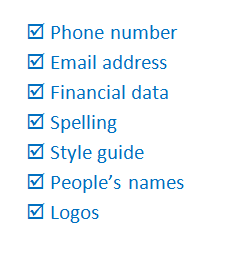
A basic proofreading checklist
That is, for mistakes like spelling errors, dead links on their website, out of date information and lack of clarity in a message.
I think if you have the budget for huge campaigns, you have the budget to get a writer or editor to help you avoid stupid mistakes. A sole trader on the other hand often has less money to spend and more hats to wear so mistakes are a little more excusable.
Budget for the details
I was asked by a major entity to complete a survey that they intend to use to produce some data that can impact on the digital media and brands.
It was longer than I expected but more than that, it was very disappointing from a group that is producing such a report.
Having a poor survey through lack of attention to detail reduces their credibility – if they can’t get the questions right, is their analysis going to be any good?
Compared to the time and money they have put into preparing and promoting this survey, and then turning the results into a report, it would have cost little to have had it reviewed by a writer or editor to ensure it would work. It’s like spending a million dollars to build your dream house but not checking the architect remembered to add a front door.
International survey
Some of the issues I came across in this particular survey were:
- I was invited twice (ie via two different .com.au email addresses) to complete this survey. Yet there was a question ‘Please enter your five digit zip code’ – my four digit postcode wasn’t accepted. So are they so ignorant to not realise we don’t all have a US zip code (the error messages actually stated “You must enter a valid US zip code”) or was this survey only meant for US residents?
Tip: if preparing any sort of online form, make it usable for all aspects of your audience – and make it clear at the start if some groups can’t participate - There were too many assumptions within the questions, but I had to answer them anyway so they are getting meaningless results from the survey. For example, “which of the following do you generate money from?” listed about six possible answers – I don’t earn money from any of them but there wasn’t a ‘none of the above’ type answer.
I did get some satisfaction in a couple of those questions if they at least gave an ‘other’ option as I wrote the real answer in that field!
Tip: always have an answer for everyone in a survey – if people can’t answer, they can skew your results with dummy answers and it frustrates them - One question asked ‘what is your key source for finding companies that don’t meet your requirements?’ followed by a series of criteria that you could use to filter out a company and a couple of other points. In other words, it made absolutely no sense and I couldn’t answer it – well I used the ‘other’ field to say it made no sense so I couldn’t choose from their list!
Tip: always do a final read of materials to ensure everything makes sense. Edits along the way can change things so read it in full to be sure – and preferably get fresh eyes to view it, too.

Poor data can’t result in a good report, whichever way you add it
One better written question they included asked where I got inspiration for my blog posts. I could only select one answer, which is limiting as I find inspiration in many places. However, I again used the ‘other’ option and wrote I am inspired by poor communications efforts I see – such as surveys like this with poor questions! You have to find fun where you can, I say!
So not a great survey (and I will struggle to trust their results) but it did inspire a blog post and gave me some amusement using their ‘other’ fields!
being vague builds anticipation – or annoyance?

A clear sign for the end of the metcard for trains in Victoria
I’ve travelled on some trains lately which is not something I do very often these days (working from home doesn’t require a lot of train trips!) and read some messages about the new ticketing system.
Now, I called it a new system because it is replacing our old system but it has been in use since the end of 2009! Basically, the myki card is an electronic contact system for public transport throughout Victoria instead of our old metcard system.
Myki has been phased in and many people were still using the metcards earlier this year.
Notices in trains
At each end of train carriage in Melbourne, a ticker system gives messages such as the name of stations as the train approaches.
Recently, that is in October and November 2012, I’ve seen the following message:
myki is replacing metcard in 2012
What do you think of this message?
Build anticipation
Sometimes, not giving the full story is a great way to keep people interested and motivate them to find out more.
Like at the end of season a TV show will have Mary heading into danger while John is arrested on his way to rescue her. If you care about John and Mary, you are drawn to see the next season.
So being vague can have advantages.
I’m not so sure that a vague ‘2012’ is good enough for something like ending a ticket system. Especially as I remember 1 July being advertised as the date metcards stopped…
Commitment or safety?
If I tell you that the blog posts you asked me to write will be ready at 1pm on Monday, you have a clear expectation. And I have made a commitment so will provide the blog posts on time.
If I had told you they’d be ready on Monday afternoon, I have given myself a little more time to get them finished but you still have a commitment to rely on – you know you will have them by Tuesday morning.
Would you be very impressed if I said ‘yes, I’ll write you some blog posts this month and let you know when they’re ready’?
There are times when you can’t be sure of a delivery date so you use less concrete references to save problems and complaints – it gives the business a safety net really.
Maybe I’m just cynical but I think too much safety net behaviour reduces your credibility and people don’t trust you. We have respect for someone brave enough to stand up and say “I will do this by this time” – even if they later adjust the timeframe a little.
So I am not impressed by a message that myki is replacing metcards in 2012.
2012 covers 12 months (10 of which have gone!) and 365 days.
2012 doesn’t give me clarity of when I must change systems. It feels like they have no faith in meeting deadlines so have extended it as much as possible to protect themselves rather than push to meet it.
I think even ‘myki is gradually replacing metcard during 2012’ would have been better if various dates were involved for phasing in myki. Or update the message during the year to be more specific, such as ‘metcard not for sale from July’ and ‘metcard readers now deactivated’.
Make your commitment
What do you think of this public message?
Does something so vague give you enough faith to trust the system? Maybe it seems reasonable to you?
When you are choosing suppliers, how committed do you expect them to be?
Why alienate your audience?
I have just finished reading a book my daughter has read a few times. I was actually keen for her to read books by this author as she is Australian, writes about the meeting of cultures and seems to give a positive outlook to teenagers.
Now, I’m not so keen.
I actually found parts of this book (and admittedly it was her first) unsettling – and I’m unlikely to read another. by this author.
Writing about Melbourne

Australia has it’s own culture and terminology
The book is clearly set in Melbourne – the characters live in Camberwell, eat Vegemite, visit Lygon St for pizza and gelati, Acland St for cakes and belong to the Debating Association of Victoria (DAV). All those details are named and a theme of the book is a girl finding her identity as a ‘hyphenated Australian’.
So why does she ‘catch a streetcar’ to a ‘mall’ with her ‘mom’ wearing ‘flipflops’ or discuss clothing choices for a 58 degree day or ‘keep to the right’ when skating at St Kilda beach?
I’ve never caught a streetcar or worn flip flops in my life, but have been in many Melbourne trams and often worn thongs. Australia is metric so her 58 degrees farenheit would be known as 14 degrees (ah, now her comments about the girl being under-dressed make sense!) and if you stick to the right on our roads and paths you’re likely to get arrested if not killed!
Consider your audience
I often read books that were written for other countries, including the USA. I mentally ‘translate’ them into my experiences. So someone is facing a difficult left hand turn in the book and I picture it as a right hand turn to understand the context. I read ‘mom’ as ‘mum’, ‘color’ as ‘colour’ and struggle over imperial references.
That’s okay when I’m reading an American book.
I resent it in an Australian book.
If you are sharing an Australian experience with readers, make it authentically Australian by using Australian terminology and spelling. To do otherwise alienates your Australian audience.
Maybe her purpose was to write for the American audience because it is larger. Then why make it so clearly about Australia? Why insult Americans to say they can’t read a book and ‘translate’ terms into their context?
In a book trying to show how cultures are different but can co-exist, I found it uncomfortable that she didn’t stay with the Australian culture. It felt hypocritical. And that she was demeaning Australian culture.
Back to business…
You may not be writing books about cultural clashes, or even in a business that has much cultural diversity to deal with, but the point is the same.
It’s important to know your voice and stick to it.
To know your audience and understand it – not just what they can understand but what could be insulting or offensive.
To really think about what you are communicating between the lines.
To realise that the USA is not the world and that it’s ok to do things in a locally appropriate way instead of copying the American way by default.
Poor communications a laughing matter?
Last night, I went to the launch of the Whitehorse Business Week at Headland and was entertained by guest speaker Russell Gilbert.
Although I have seen Russell many times on TV shows and the like, I hadn’t seen a full routine from him before. I really enjoyed it – he was funny and had us all laughing, but also showed he can do magic and sing.
Two of his jokes in particular were based on communications so I thought I’d share them today.
Multiple meanings
 Have you seen one of those yellow signs warning of ‘wet floor’?
Russell apparently cannot see one of those signs without looking for a bucket of water (ok, I’m using a more appropriate source of liquid!) so he can wet the floor.
In this case, the signs are not incorrect but Russell spotted that ‘wet’ can be an adjective (as intended on these signs) or a verb (as the instruction Russell assumed).
For any important message, it is worth checking for alternative versions of a word to be sure you aren’t saying something you really don’t want to say!
Clarity through order
 Russell also spoke about cleaning products, which may not seem very funny!
Many cleaning products include the sentence ‘cleans and kills germs’ but Russell asked why would you bother cleaning the germs before killing them?
Do the germs say ‘I’m dying but I’ve never looked so clean, it’s great!’?
Ok, we all know they mean ‘cleans a surface and kills germs on that surface’. And it’s good they’ve gone for a shorter version to give their message clarity.
They could make their message much clearer simply by changing the order of that sentence – ‘kills germs and cleans’ is much clearer and doesn’t give comedians an opportunity to pick on it :).
However, kill germs and cleans sounds wrong because we are so used to the other order – would you think that’s a negative or a positive for changing the order if you were producing a new cleaning label?
Do marketers want the emphasis on cleaning or killing germs? Would that be a factor in which order those words are placed?
Would your label aim for clarity or marketing emphasis or customer familiarity?
* images courtesy of 123rf and Tash Hughes
Check your edit notes are gone
Have you ever added notes for a designer or typist? Are you sure they were removed later?
It’s an easy and obvious thing to do – add a note directly where it is relevant so someone else can make appropriate adjustments. I do it a lot, especially in pdfs that I send back to a designer for changes.
Make sure they’re removed
Today, I came across this image on Facebook:

It amused me because someone has asked the designer to add extra information – and the designer has added ‘please add’ as well as the required information. And no one noticed it to have it removed before publishing the banner.
At least it was a polite request that was overlooked!
Being a polite request, this has amused me and in no way detracts from me being a Cadbury customer (given I love their chocolate it would take a lot!) But it does have the potential to damage a reputation.
How do you feel about Cadbury making such an error?
I remember a similar experience in a training manual I once read. In amongst general text was a paragraph to the effect of “Chrissie the following graphic needs to add a break between a and b plus include x, use lower case letters and correct the categories”.
It is funny to tell but it isn’t a professional look for the training organisation!
Testing the reading
Some years ago, I worked in an engineering company and wrote many Expressions of Interest (EoI). I generally took an old EoI and hand edited it, adding and subtracting text as well as moving things around.
The department secretary took my rough notes (and they were rough at times!) and typed up beautiful documents.
Just for fun, I would occasionally test her and write something like “The company has three experienced engineers and the cow jumped over the moon, The little dog laughed to understand this project’s timing.”
It’s just as well I did proof read those documents as the secretary faithfully typed up the cow jumping over the moon!
Can you tell I’m not a talented typist? There’s no way I could type pages of information without actually ‘reading’ and processing it!
Other examples?
Have you spotted live examples of editor comments that have been included rather than followed?
Ensure your surveys give enough options
Earlier this week, I answered a brief survey from a Government body – correction, I tried to answer a brief survey but the questions stopped me.
For a series of items, you had the choice of yes (I want to get this) or no (I don’t want to get this). And you had to answer yes at least one to have your survey accepted.
However, for three of the items I already have them. So my answer is neither yes nor no, leaving me in a quandary about finishing their survey.
I choose to answer no because I didn’t want duplicates but I wonder how much that has skewed their results? And how many other people in my position chose no?
When writing surveys and forms
It is really important to think about your questions from every angle to be sure people can complete your survey/form.
Making your questions easy to answer
- keeps people happy rather than frustrated
- makes your page more accessible
- means the response you gather will be meaningful rather than nonsense because people make up answers to get through
I think it’s especially worth thinking about if you have made the answers black or white – can you be sure no one will want to answer grey?

Assuming only two currencies definitely excludes some people
If you’re asking for a gender, under 18/over 18 or in business/not in business, there is a clear either or response. However, as soon as you have a less concrete option, be careful to include that in your possible responses.
While ‘other’ or ‘unknown’ may seem weak answers, they do at least give people the option of completing your questions without getting stuck or making up answers.
And a ‘both’ or ‘all of the above’ answers give a lot more choice, too.
Train the child’s flesh
Clear writing is important for getting your message across, and often to help you make sales.
A poor message won’t attract as many sales nor earn respect or trust so it is worth getting help if you struggle writing clearly.
As a very clear example of this, I wanted to share the information on the back of a jigsaw puzzle box aimed at 3 year olds.
Give parents’ word:
In childhood there are per 80, the growth of human’s brain. At period the learning and attraction is most strongest in a life. So the parents pay attention to train your children.
Clever is not inborn, it’s gestated in the circumstance of growth. If the parents can choose more toys, that it can guide their hand and brain with together. Not only it trains their dexterity hands in the iteration, but also coordination function their brain, eyes and hands, It will breed a clever, health child.
Introduction of function:
Play the number train, it can train acquaintance and memory to color, material and English word, and enhance recognition to sight and total concept.
Play the number train, Must according to the order of the number, Then patch a intact number train, So it can advance the growth of child’s flesh and raising the custom of hand.
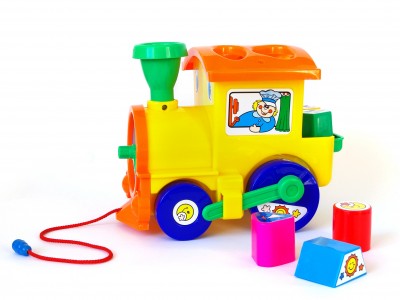 On the positive side, if it was web content, the word train was a good choice – it both represents the image on the jigsaw and the idea of training or teaching so is a great keyword for them.
Beyond that, I’m struggling to find much positive about this example of writing! Although to be fair everything is spelt correctly! I’m not going to list all the errors, either, as it would become a very long post if I tried, lol.
Obviously English is their second language but if you’re selling to English markets it is worth getting someone who truly knows English to check your work first.
Luckily, I didn’t need any instructions to do a jigsaw but imagine if I had needed their instructions…
Recent Comments