
TashWord
Tash is a professional writer who loves helping people communicate clearly and effectively.

Do you think there is a significant difference between understanding a task and being able to do it with skill?
I would never pretend to be able to write and design a PDS for example – I hire a professional designer for the design aspects of the job – but I understand many aspects of making it effective (such as using white space and images to make it appealing, avoiding ‘orphans and widows’, being consistent in fonts and headings, and adjusting things to work with page breaks and spreads).
Likewise, when dealing with an architect, I can state functional uses of a space and know that they will match function, materials, space, appearance and reality (i.e. not every idea is really feasible!) I understand the project and outcomes but leave the expert to draw up the plans.
A recent IBM study about marketing professionals showed that only 12% consider social media expertise as critical to their personal success in the next 3 to 5 years. Ross Dawson points out the concern with this figure – how can marketers maximise social media for the business they market if they don’t understand it?
I know I understand social media and its power much better since I started using it. I even remember wondering about the value of blogs and making time to read blogs – until I started this blog and realised it’s potential and how useful other blogs can be.
I think it is ok to get someone else to write your blog posts or monitor your mentions on social media. But understanding these media yourself is important. Why?
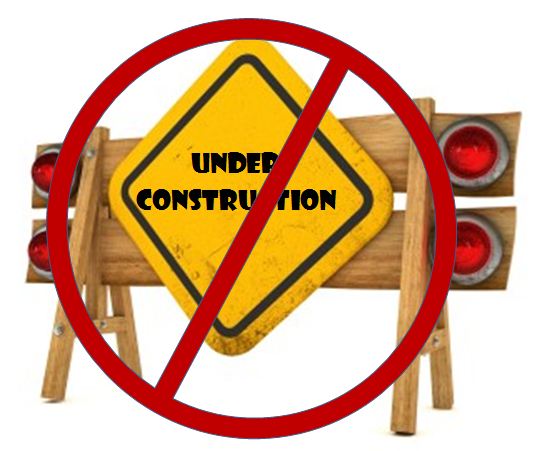 I honestly thought most people online know that an ‘under construction’ website is not a good move. Search engines don’t give any credibility to sites with nothing more than a ‘coming soon’ message and people don’t like wasting their time on such sites.
As I posted about in my ‘starting a website’ series, it is very easy to put a simple web page as a temporary site while a full site is being developed. This way you can get onto search engine lists, provide some interest and begin marketing efforts.
So I was very surprised this morning to visit a site I had received an email about.
The homepage has a nice background but twice stated ‘under construction’ as well as ‘temporarily unavailable’ and ‘coming soon’ – that’s a lot of repetition in eight short sentences (one of which was ‘please be patient!”) Other than the business name as a heading, there was no information about what the business does and no real content.
Given I was making a decision about the company, this wasn’t good marketing for them. They didn’t include contact details but at least there were links to their twitter account and email.
Oh, there was no twitter user name or email address attached to the links, so their credibility fell further.
However, the biggest shock was when I clicked on the link in the footer which I assumed was their designer but thought may give me some information. It wasn’t their designer but a site selling ‘under construction’ themes for blogs! People are spending money on pretty backgrounds to put up words that may hurt (and certainly won’t help) their online reputation.
If you’ve been online for a while, does this shock you as much as it does me?
If you are looking at getting your business online, please don’t waste your money on a template or designer offering under construction pages. A plain page with an introduction and contact details will work much, much better.
What did you do while your site was being developed?
One definition of insanity is to keep doing what you’ve been doing and expect different results.
Robin Cangie makes a similar point with “it’s not the metrics. Your marketing just sucks“.
So if you’ve been using Facebook for your business for 6 months and got nothing in your business to show for it. Does it make sense to keep posting on Facebook every day – or is it time to look at other options?
Maybe your Facebook campaign isn’t working because
Measuring marketing (whether social media or otherwise) is important, but not more important than running good marketing efforts in the right place at the right time (yes, the 4 Ps of marketing still apply).
Every time your marketing results are less than expected (or desired), you need to decide whether the poor results are due to a short time frame (looking at results too soon can be misleading), inaccurate measurements, a poor campaign or something else. From that, you can decide to continue the marketing, adjust it or stop it.
Going back to our Facebook example, something has to change. Maybe it is move to another social media channel (where your audience actually spend time) or maybe it just needs a new approach.
“There’s no point flogging a dead horse” applies to marketing, too. However, you must give each campaign a chance – no additional sales after a week on Facebook doesn’t mean Facebook is a poor strategy for your business. Sometimes it is a slow process to see results from our actions.
How do you judge when something has been tried long enough to move onto a new strategy? Or do you just keep trying the same thing even when there is little chance of success?
As a professional business writer, I sometimes am asked if I have experience writing content for a specific industry.
While I could give a yes/no answer to each person, depending on the industry they are asking about, the reality is that being an experienced writer is more relevant that my industry knowledge.

I am not an engineer or dentist, a seamstress or accountant, yet these are some of the industries I have successfully written for
Don’t believe me? Well think about these points:
In comparison, we need some trees removed at home. We want a professional tree lopper who will do the job safely and appropriately – I don’t care if they’ve chopped down the same type of tree before. Likewise, I don’t insist on a hairdresser who only does long, wavy hair or a graphic designer who has experience with other writers’ websites.
If you need writing help, you will find it much harder to find a suitable professional if you limit it to those with industry experience. Concentrate on finding a good writer and providing them with the relevant facts for a project (or at least reliable sources of information).
Do you disagree?
* Images collated from Microsoft Clipart
I saw some You Tube videos this morning with my son and one stood out for all the wrong reasons.
As the video started, a title screen showed “Here’s are friend”. After rereading it, I decided it was meant to be “Here’s our friend” and the lyrics within the following video confirmed my assumption.
The associated description included some more gems, such as “go’es” and “cellerbrate” and “there” instead of “their”.
In this case, it was not a business and professionalism probably wasn’t a major concern for the video poster. However, if you are going to the trouble to make a video and put it online for people to view, surely it’s worth the time to get the title correct?
Errors in content are not desirable but major errors in a title destroy credibility and may prevent anyone moving beyond the title so having good grammar and spelling in a title is important.
Have you seen poorly written titles that stopped you using that resource (document, video, etc)?

The carbon tax should be protecting beautiful places like this (Ricketts Point in bayside Melbourne)
Have you thought about how the Carbon tax will impact your business and pricing structure yet? Will you update your web content to mention carbon pricing?
Now that the lower house has passed the carbon tax legislation, we know it’s likely to be in place next July and have some idea about what is involved. For instance, next financial year carbon will be taxed at $23 per tonne and we’ve been told to expect a 0.7% increase in living costs (although some or all of this may be covered with tax cuts and increased Government payments). The price would change the following year, and beyond.
Small businesses won’t have to directly pay a carbon price like the big 500 corporates, but that doesn’t mean we are unaffected. At the minimum we will face increased power costs and (as I understand it) small businesses are not getting anything in the compensation packages.
How will this impact on your business? Can you absorb the increases or will you need to update your prices?
Personally it will be increased power costs that will affect my business, along with (potentially) higher supplier costs. Only I have no idea what ‘$23 a tonne of carbon’ means for my electricity bill.
For a business delivering goods, buying materials for manufacture or providing mobile services, the impact could really add up.
As individuals, it is good to know that the ACCC will be watching for price increases above 0.7% (where labelled due to carbon tax) so we aren’t ripped off. As business owners, it’s tough – will our cost increases be less than 0.7%? can the business afford to pay the owner(s) more to help with higher living costs? can I increase my prices and increase additional costs (e.g. delivery) by 0.7% each and be operating legally?
It sounds simple – use a lot of carbon, produce a lot of greenhouse emissions, and pay for it. Implementing it into real business practices is going to be harder.
So what are your thoughts about small business pricing next year? Any idea how your business will deal with it?
PS You can learn more about carbon pricing, it’s value and climate change through COs Australia’s You Tube channel.
Have you ever experienced a LOT of questions from your suppliers?
I aways lots of questions about new writing projects – less so for existing and long-term clients – and some people are amazed by that. Usually amazed and appreciative, but amazed none the less.
Could you imagine going to a doctor or lawyer and not have them ask questions to clarify the issue and find the best solution? Would you trust a doctor who said hello and handed you a script?
As far as I am concerned, I like my suppliers to ask questions to show interest in the project (rather than the dollars) and to be sure they understand what I actually need.
As a writer, I don’t feel I can’t write good content if I don’t know much about the topic of the piece. I know I can’t write effective content if I don’t know who the target audience is or the purpose of the piece. So I ask lots of questions before I write or edit any content.
Although it make take you more time than you expected to hand over a project if the supplier asks many questions, it is usually worth it for the quality of the final result.
Some reasons to appreciate these questions are that the supplier:
So be warned – if you ask me to write for you or help with a communications project, you will be asked a number of questions!
How about you – how have you reacted to suppliers asking questions in the past?
Do you respond differently to ‘dumb’ questions compared to a supplier gathering useful information?
Earlier this week, we looked at how shallow websites are not as valuable for your visitors or your SEO efforts so let’s look at how to improve that situation.
Shallow content is giving the minimum so by default giving more is adding depth. Simple.
How can you provide more depth to your content?
I like to make a difference, to contribute to my community and the world. So I like to DO things when I can, and joining Blog Action Day each year is a small action that I aim for. 
Blog action day is about many people discussing a topic at the same time to get greater awareness – for example, posting about ‘green’ business practices in 2009 was part of making people think about climate change.
This year’s theme is food which doesn’t seem quite as relevant to a business and communications blog – but I see that as challenge rather than a reason to not blog! Yes, I am doing this two days late but I adding my voice to food blogging day.
What about you – could you find some relevant content to blog about food?
Home-grown food
The flavour and pleasure of fresh fruit and vegetables is always superior to store-bought equivalents – the apples off the tree in my yard last summer were delicious and I even enjoyed then stewed (I normally avoid cooked apples).
But there are more benefits than just yummier food when you grow fruit and vegetables at home:
Paul Hassing recently posted how changing food habits can also be good for business (namely it reduces his stress so he can work more effectively) and I would agree with that.
I also see another business lesson from home-grown food.
Home-grown food tastes great, is more interesting and has a number of advantages. So is original business material.
Do you prefer to read an article or web page that is the same (or practically the same) as 100 others or an original piece that gives you new information or a new perception?
Are you more attracted to a tailored website or one that is based on a template you’ve seen 20 times already today?
Letters and emails addressed to you by name and include something personal are much more effective than a standard letter addressed to “Dear sirs”.
A landscape designer who uses the same layout regardless of block shape and aspect won’t be as successful as one who designs a unique garden every time.
The chef staying to the same old recipes and copying other’s presentation will never be a master chef.
And so on. The point is to use home-grown ideas and skills rather than going for the mass-produced, lack-of-variety style – the results are more interesting, flavoursome and fulfilling.
What do you think – are home-grown food and home-grown business behaviours more appealing and rewarding?
Recent Comments